FUE hair transplant in Bordeaux
An FUE hair transplant redistributes hair follicles from the occipital donor area to the areas of the scalp that are thinning.
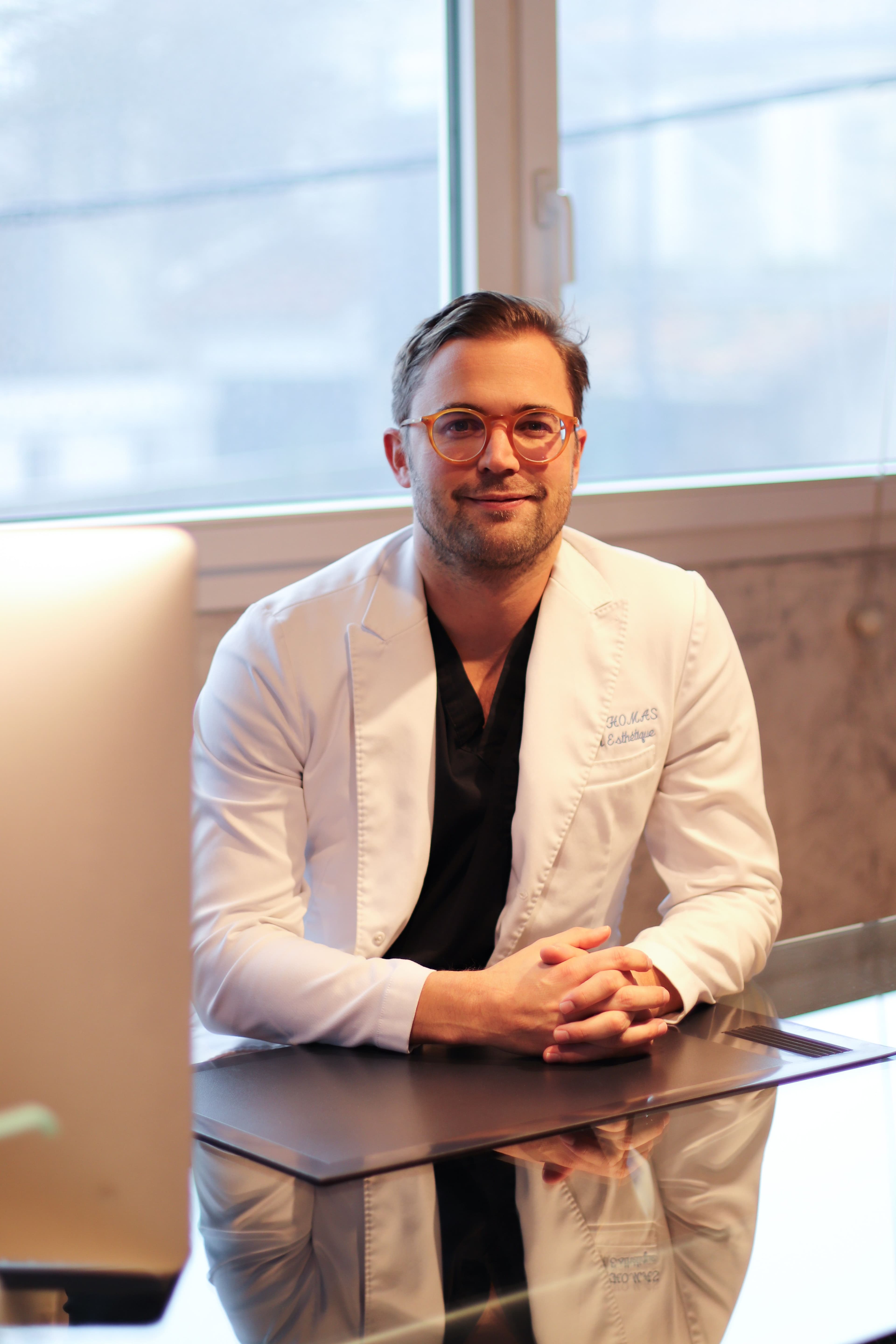
Written by Dr Maxence Thomas, plastic surgeon
Content reviewed on 13 October 2026 · RPPS 10101703519
- Type of anaesthesia
- An FUE transplant is usually performed under local anaesthesia.
- Duration of the procedure
- Its duration depends mainly on the number of grafts and the extent of the areas to be treated.
FUE hair transplant
Dr Maxence Thomas, plastic surgeon
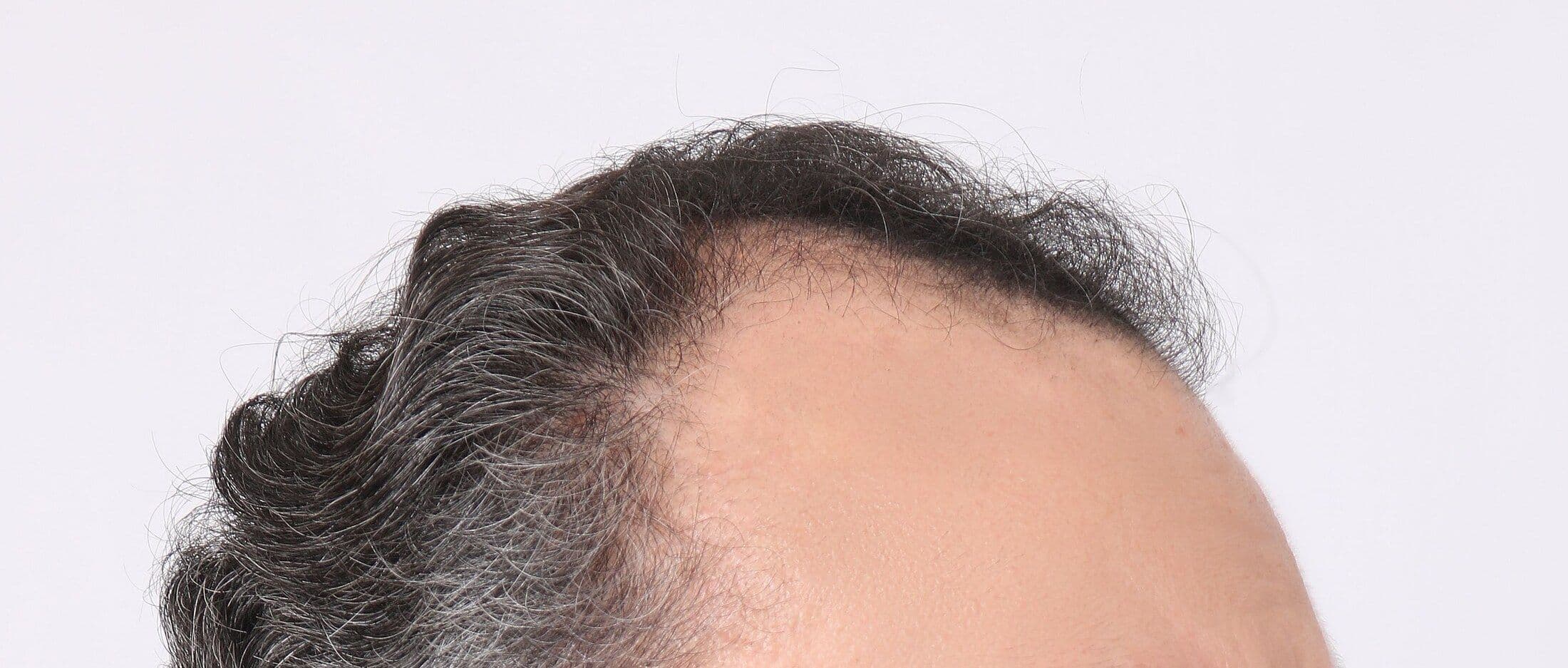
An FUE hair transplant redistributes hair follicles from the occipital donor area to the areas of the scalp that are thinning (usually the front or the crown). It can be considered to redesign the frontal hairline, fill in receding temples or improve coverage of the crown.
A consultation with Dr Maxence Thomas in Bordeaux makes it possible to look for the cause of the hair loss, assess the donor area and determine whether a transplant is suited to your situation.
What is the FUE technique?
FUE, or “Follicular Unit Extraction”, consists of individually harvesting follicular units using a small-diameter circular (motorised) instrument. These grafts, which may contain one or more hairs, are then implanted in the areas to be treated.
Harvesting is usually performed at the back (occipital area) and on the sides of the scalp, in an area where hair is usually more resistant to androgenetic alopecia.
Unlike the FUT technique, FUE does not require removing a strip of scalp. It does, however, leave small dot-like scars: it is therefore not a scar-free procedure.
How does the procedure work?
Who is a hair transplant for?
A transplant may be offered to some men and women experiencing hair loss, particularly in the context of androgenetic alopecia.
Whether it is appropriate depends on several factors:
- The cause and progression of the hair loss.
- The density and quality of the donor area.
- The extent of the thinning areas.
- The patient’s age, medical history and expectations.
Not all hair loss calls for a transplant. Further tests or medical treatment may be needed before considering surgery.
As the supply of hair available for harvesting is limited, the plan must take into account how the baldness may progress.
The consultation before an FUE transplant
The consultation is used to examine the scalp and define a realistic plan: areas to be treated, design of the frontal hairline and estimated number of grafts.
The aim is a harmonious result, suited to the face and age, while preserving the donor area.
The expected benefits, limits, risks and alternatives are explained. A personalised quote sets out the terms and cost of treatment.
How is the procedure performed?
An FUE transplant is usually performed under local anaesthesia. Its duration depends mainly on the number of grafts and the extent of the areas to be treated.
It involves three main stages:
- Preparation: marking the harvesting and implantation areas, preparing the hair and local anaesthesia.
- Harvesting: individual extraction of the follicular units and preparation of the grafts.
- Implantation: placing the grafts, taking into account hair direction, distribution and the planned design.
Whether and how the hair is shaved is discussed during the consultation, depending on the technique chosen.
What is the recovery like?
Post-operative course
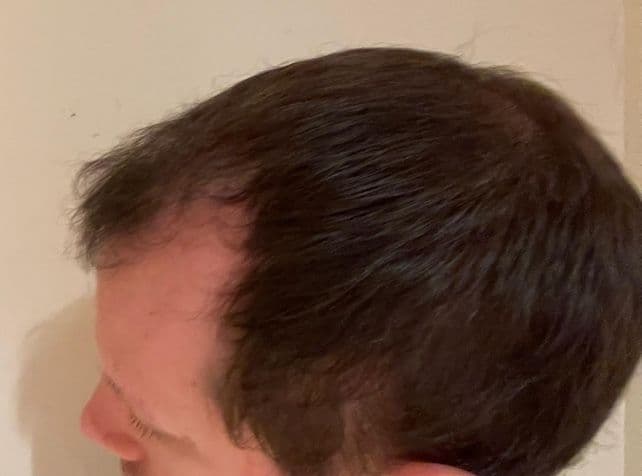
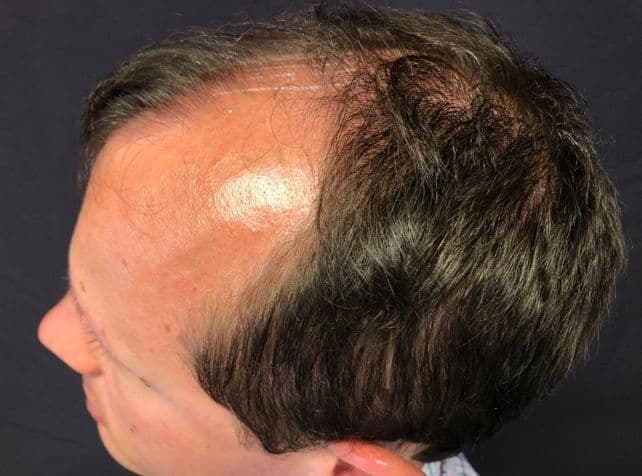
Redness, small scabs, scalp tenderness and temporary swelling may appear after the procedure.
Precise instructions are given for washing, care and protecting the grafts. Work and sport can usually be resumed after 2 weeks, depending on the type of activity and healing.
Transplanted hairs may fall out in the first few weeks. This usual shedding of the hair shafts does not necessarily mean the follicles have been lost: regrowth appears gradually over the following months.
Risks and limits
Like any procedure, a hair transplant carries risks: bleeding, infection, reaction to the anaesthetic, temporary changes in sensation, inflammation of the follicles or visible scarring.
Temporary loss of existing hair may occur. Insufficient regrowth, disappointing density or an uneven appearance are also possible.
Excessive harvesting can permanently thin the donor area. Preserving it is therefore essential.
What results can you expect?
When can the result be assessed?
The result develops gradually. Initial regrowth may appear around the third or fourth month. The result is usually assessed at around twelve months, sometimes later depending on the area treated.
The coverage achieved depends on the number of grafts available, their survival, hair diameter and the surface to be covered. A transplant does not always recreate the original density.
Nor does it stop the loss of non-transplanted hair. Medical treatment and follow-up may be offered to support the progression of the alopecia.
How much does an FUE hair transplant cost in Bordeaux?
The price of an FUE hair transplant performed by Dr Maxence Thomas in Bordeaux at the Clinique Esthétique Aquitaine is generally between €3,900 and €4,300, depending on the extent of the areas to be treated and the planned number of grafts.
A personalised quote is provided after the consultation. It details the cost of the procedure, the services included and the follow-up arrangements.
Book an appointment
To find out whether an FUE hair transplant is right for you, book an appointment with Dr Maxence Thomas in Bordeaux.
How much does it cost?
From €3,900 to €4,300
A detailed quote is given after the consultation. For a cosmetic procedure, French law requires a cooling-off period of at least 15 days between the quote and the surgery.
FAQ
The number of grafts depends on the extent of the areas to be treated, the coverage sought and the richness of the donor area, which must be preserved. It is estimated at the consultation, when the hairline is drawn and the areas to be treated are defined. As a guide, a single session implants between 1,800 and 2,500 follicular units at most.
A transplant may be offered to some men and women with hair loss, particularly androgenetic alopecia. Whether it is indicated depends on the cause and progression of the hair loss, the density of the donor area, the extent of the thinning areas, age, medical history and expectations. Not all hair loss calls for a transplant: tests or medical treatment may be offered first.
The procedure is usually performed under local anaesthesia, which keeps it only mildly painful, including afterwards. After the transplant, scalp tenderness, redness, small scabs and temporary swelling may appear. The prescribed painkiller is paracetamol.
Returning to work and physical activity depends on the type of activity, the procedure and how the scalp heals. Precise instructions are given for washing, care and protection of the grafts. Work and sport can usually be resumed after 2 weeks.
The result develops gradually. The transplanted hairs may fall out in the first weeks: this shedding of the hair shafts does not mean the follicles are lost. Initial regrowth may appear around the third or fourth month, and the result is usually assessed at around twelve months, sometimes later depending on the area treated.
The grafts are taken from the back and sides of the head, an area where hair is usually more resistant to androgenetic alopecia. However, the transplant does not stop the loss of non-transplanted hair: baldness may continue to progress around the treated areas. Medical treatment and follow-up may be offered to support this progression.
Unlike the FUT technique, FUE does not require removing a strip of scalp. It does, however, leave small dot-like scars in the donor area: it is not a scar-free procedure. Shaving arrangements are discussed at the consultation.
The price of an FUE hair transplant performed by Dr Maxence Thomas at the Clinique Esthétique Aquitaine is generally between €3,900 and €4,300, depending on the extent of the areas to be treated and the planned number of grafts. A personalised quote, given after the consultation, details the cost of the procedure, the services included and the follow-up arrangements.
Any other questions? Dr Thomas will answer them during the consultation.
Book an appointmentRelated procedures
What patients say
4.7/5 · 121 Google reviews« I recommend Dr. Thomas without hesitation. This is the second time he's performed my lip injections, and I'm once again delighted with the results. The work is meticulous, elegant, and above all, natural—exactly what I was looking for. He perfectly respects the facial structure, and the result is harmonious, without being overdone. I also want to thank his assistant, Béatrice, who is incredibly kind. Always smiling and welcoming, she makes you feel truly listened to and well taken care of from beginning to end. An excellent experience; I will definitely return. »
 Coraline Hayward5 months ago
« One year after my breast augmentation surgery, I wanted to warmly thank Dr. Thomas for his professionalism and outstanding work. The result is very successful, natural, and completely met my expectations. During my stay at the cosmetic surgery clinic, the entire team was incredibly kind, caring, and reassuring. I experienced very little pain, which surprised and relieved me greatly. I also want to acknowledge the doctor's secretary, who called me the day after the procedure to check on me—a very thoughtful and genuine gesture. I wholeheartedly recommend Dr. Thomas and his entire team. »
 Raphaëlle Mazeau10 months ago
« A huge thank you to surgeon Maxence Thomas, who took care of me. He's the best in the department. Excellent service. Special mention to surgeon Maxence Thomas and his team. Thank you for your kindness and for putting me at ease, and for the follow-up care you provided afterward. Very satisfied with the result, even after just one week. Impressive! I can't thank you enough. Thank you for this operation. So happy! Very welcoming. I highly recommend them. Highly professional and charming. I am extremely grateful. »
 Chrystel Fereola year ago
Reviews published on Google · See all reviews on Google